Blogs

Detect changes made to calendars between two projects in P6

The Claim digger or Schedule Comparison is a widely used tool in P6 to compare between two projects and detect the differences.

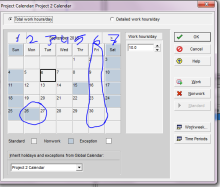
One of the main shortage of the Claim Digger or the Schedule Comparison tool is detecting the changes in calendars.

The tool will not detect any revisions in calendars working hours or changing from Project to Global calendar if both have the same description.

Claim Digger will tell us nothing about calendars other than whether the name of the calendar is different.

Time: Conserving the Precious Resource

Time is the dominant constraint on all projects.  There is a constant race against the clock.  Many projects have fixed completion dates determined by external forces. Projects that fall behind schedule, struggle to catch up.  I have never met a project manager who said there was too much time.

"Time is also a unique resource. One cannot rent, hire, buy, or otherwise obtain more time...Time is totally irreplaceable.” –Peter Drucker

Determine the longest path of a resource leveled schedule in P6

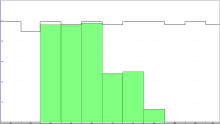
Unfortunately when it comes to resources and resource leveling, P6 model is absolute. P6 doesn’t calculate the float correctly and the longest path will not be accurate since the late and early dates will not change after leveling.

Primavera P6 doesn’t take in consideration the new dates after the leveling in calculating the total float or the longest path, to illustrate further if we have a project consists of three activities A,B & C and they all share the same resource and each activity 5 days duration and the project completion after 15 days.

The story behind the negative float in P6

The negative float is a very popular hot topic in the scheduling field and it’s generated when the late dates are less than the early dates and usually it’s accompanied with a delay in the project, and a lot of project management professionals think that the only reason for a negative float is because a constraint that has been used in the schedule. Although the first thing you look for when you see a negative float is the constraints that are applied to the schedule, but that not the only reason that generates the negative float in P6.

Beyond Earned Value Management

If I asked you what the trickiest part of project management was for your enterprise, what would you say?  If you answered managing the diverse projects in your portfolio – you’re not alone. Most businesses work on a variety of projects (whether it be different contract types, duration or dollar amounts) that can be categorized into four major tiers:

Standard Deviation for Project Managers

Standard deviation is an abstract concept derived from observation rather than calculation or experimentation.  The standard deviation (SD, also represented by the Greek letter sigma or σ) is a measure that is used to quantify the amount of variation or dispersion in a set of data values; and is expressed as a quantity defining how much the members of a group differ from the mean value for the group.