

Dear Planning Planet Members,
Welcome to the newsletter; did you know that this newsletter goes to the largest community of project controllers on planet Earth? As many of you know we’ve transitioned to a new, faster, and more modern web portal that’s already benefiting our users. We appreciate your ongoing feedback in identifying the bugs or issues we need to fix.
Written something on project controls—an article, a thought piece, or even a rough idea? Get in touch and we’ll include it in future posts. It’s free, and we love collaborating with our community.
PMO vs PROJECT CONTROLS TEAM?

Project Controls ≠ PMO and vice versa!
Why do we keep muddling these two terms up in the Engineering and Construction space? We need to stop this and wake up! Many E&C organisations understand the difference, but far more do not. This is especially evident when people who clearly only have project controls experience are claiming to be PMO experts.
Lots of posts on what a PMO is and is not. What functions do you think belong in a PMO v a Project Controls team?
Read and join the discussion...
Source: Martin Talbot
THE TEAM NEEDED A CLEAR WAY TO DIAGNOSE WHAT WAS DRIVING NEGATIVE FLOAT

Does this sound familiar?
As the project progressed, unforeseen delays driven by procurement challenges and external dependencies threatened a critical milestone.
The team needed a clear way to diagnose what was driving negative float, validate sequencing assumptions, and identify feasible options to accelerate work without inflating costs or straining field teams...
Even minor adjustments to a project schedule can create ripple effects, especially on complex builds where milestones are tightly linked.
That was the challenge facing Suffolk Construction as the team led preconstruction and construction planning for a life sciences development where schedule certainty was critical to success.
When external factors put key dates at risk, the team needed a clear way to diagnose what was driving negative float, validate sequencing assumptions, and identify feasible options to accelerate work without inflating costs or straining field teams.
By leveraging ALICE’s Schedule Insights Agent, the team identified optimal ways to re-sequence work and improve productivity, ultimately recovering 42 days in the schedule.
Read the full case study here....
WHEN A CONTRACTOR SAYS THAT IT OWNS THE FLOAT, WHAT DOES THAT MEAN?
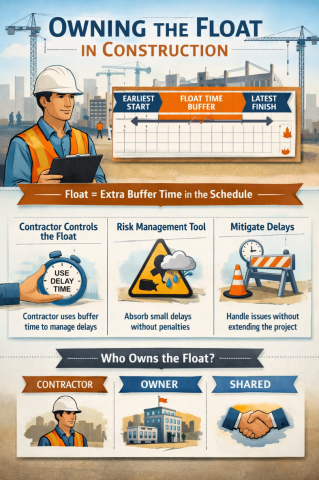
This article examines the concept of "float" in construction project scheduling, addressing the common misconception that contractors "own" float.
Through analysis of legal precedents and practical applications, we clarify that float is a temporal characteristic of project schedules rather than a proprietary asset, and explore the implications for extension of time claims and delay analysis.
1. Definition and Purpose of Float in Construction
2. The "Ownership of Float" Misconception
3. Legal Precedent: The Ascon v McAlpine Case
4. Subsequent Judicial Affirmation
5. Practical Implications for Project Management
The full post can be accessed here...
Source: Mohammad Khalifa Talafha, PMP
WHY DO SO MANY FUND MAJOR PROJECT CONTINGENCY AT THE P50 (MEDIAN)? WHERE DID THAT PRACTICE COME FROM? IT MAKES LITTLE SENSE. SURE, HALF WILL UNDERRUN AND HALF WILL OVERRUN IN A PORTFOLIO.
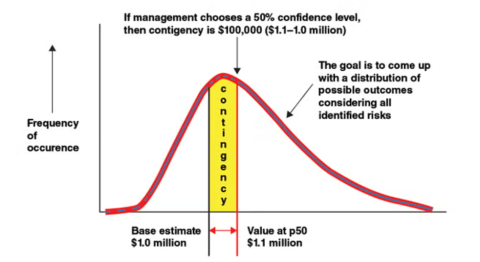
Here is a really useful and thought-provoking discussion - Why do so many fund major project contingency at the P50 (median)? Where did that practice come from? It makes little sense.
Sure, half will underrun and half will overrun in a portfolio.
But the half that overrun will do so by greater amounts (for project cost and schedule, "life is lognormal"). And the project contingencies at p50 are not additive for the portfolio.
P50 can be said to be "optimism bias as policy".
In my consulting I recommend funding contingency at the mean. Depending on the QRA outcome distribution, the mean is usually >P50 but <P60. Contingencies based on the mean are additive for a portfolio. The mean is literally the expected value (as in contingency is "expected to be expended" per AACE definition.)
Worse, P50 is not good for deciding between alternatives (i.e., Select phase). In a simplistic example of two options
- with 3-point distributions of 2, 5 and $8 million and
- another at 4, 5 and $15 million.
The means are $5m vs $8m while the medians (P50) are both $5 million.
So, decide on a coin toss using the P50? or consider the tail risk with the mean?
What are the justifications or logic behind this - join, or read the discussion...
Source: John Hollmann
BLOG NO 5 - CONTINUING WITH PEOPLE – PROJECT CULTURE
Fed up with adverts from software companies and consultancies that are going to change the world of Planning and solve all your project problems? This series of occasional articles promises nothing but thought provoking questions on how well we understand the basics of our profession from the perspective of a retired planner with 50 years’ experience in the industry whose worked in a variety of UK EPC roles for Clients and Contractors with no axe to grind.
We are going to look at PEOPLE, PROCESSES, and PROCEDURES (the old 3P’s – not 4P’s, 5P’s, 6P’s or 7 P’s) that we all have been educated and trained to use in our everyday work (5W’s + 1H) and POKE THEM IN THE EYE / LOOK UNDER THE STONE (the Inverse Universe) and get into trouble with the planning profession because for loads of reasons were not doing so well. If you want to contribute to this soul searching drop me a line with either POSITIVE or NEGATIVE comments (yes, we are PLANNERS that can hold both views at the same time!)
No 5 - Continuing with PEOPLE – Project Culture
In blog 2, 3 & 4 we looked at the characteristics that make a good planner, the support he should expect from the department, areas of self-care and habits he should form. Now we need to look at the culture in which he/she works. I’ve invited contributions from other planners for this one as I realise that working on JV’s based in the UK, on Projects in the Middle East and Asia probably gives me a biased view.
Nick Sunderland – CEO and Founder of Customized Construction Management Services, Head office in Malaysia, working throughout Asia. Culture is one of the least acknowledged, yet most influential, forces shaping how project organisations actually function. Having worked across multiple jurisdictions (UK, North America, and Asia) and cultures for more than two decades, it has become clear to me that projects do not fail simply because of poor processes or technical shortcomings, but because people bring fundamentally different assumptions about authority, communications, and accountability into the same project environment. These assumptions are rarely articulated, yet they strongly influence behaviour, in some cultures, authority is firmly vested in the Project Manager and information is expected to flow through a strict hierarchy. In others, parallel communication and open challenge are seen as signs of engagement and professionalism. When these differing expectations coexist without being recognised, confusion and frustration can quickly follow.
Language adds another layer of complexity. English is often adopted as the working language on international projects, but shared language does not mean shared understanding. Even when fluency exists, nuance does not always travel well. Conditional wording, polite hedging, or carefully balanced professional opinions may be interpreted very differently by non-native speakers. Conversely, direct language intended to be efficient can be perceived as abrupt or confrontational. This becomes particularly critical in written reports, dealing with risk, delay, or entitlement, where meaning lies as much in what is not said as in what is. Visual tools we rely on – bar charts, programme logic, colours, and tables – are also not culturally neutral. A red bar may signal urgency to one party and routine information to another. A programme narrative may be read as an instruction rather than as an analysis.
My experience working across ASEAN and other regions has also highlighted how culture intersects with legal and organisational structures. Multinational organisations often operate under one legal mindset at head office, while projects sit within entirely different legal systems and employment frameworks locally. This can create tension when expectations formed in one jurisdiction are imposed on another without adaptation. Add to this the practical realities of work permits, employment laws, local professional norms, and it becomes clear that project culture is shaped as much by external context as by internal governance.
Ultimately, effective project leadership in multicultural environments requires more than technical competence. It requires an awareness that cultural influences affect how authority is exercised, how information is received, and how meaning is derived from both words and data. Projects perform better when leaders acknowledge these differences explicitly and adjust their communications, reporting, and decision-making structures accordingly, rather than assuming alignment where none may exist. In my experience, recognising and managing cultural dynamics is not a “soft skill” – it is a core project control function that directly impacts outcomes.
El Mahjoub Lagrini – Quebec, Canada. Mega construction projects bring together thousands of people from different companies, disciplines, and national backgrounds. In this environment project culture is shaped by the interplay of management style, national culture, and team interaction. Management style sets the tone for accountability and participation, but it must adapt to cultural expectations. What feels clear and motivating in one country may be perceived as harsh or discouraging in another. In Canada, for example, a French project director was dismissed after six months because his communication style was judged too rough, while three African colleagues left the same project feeling undervalued and distrusted. These cases highlight how cultural misalignment can erode trust and weaken performance on large, complex projects.
Success on mega projects depends on clarity and respect. Leaders must encourage participation while keeping scope and accountability transparent, and teams must avoid prejudice that assumes foreign colleagues are less skilled, Team-building events between contractors and clients are valuable opportunities to solidify relationships, while clear norms about how dissatisfaction or requests for improvements can be expressed allow foreign team members to navigate expectations confidently. Studies show that multicultural construction projects spanning more than one continent succeed at a higher rate when communication frameworks are explicit and inclusive. The common denominator across these cases is clear communication – it is the glue that harmonizes management style, national culture, and team integration into a productive project culture capable of delivering mega projects successfully.
Mohamad Abraar - I currently serve as a Planning Manager at Milo in Dubai, where I coordinate project schedules, resource allocation, and deliverables across multiple initiatives. My role involves developing comprehensive project plans, monitoring progress against milestones, and facilitating communication between stakeholders and project execution teams.
Coming from India and working in Dubai has given me a unique perspective on project organization. Indian culture emphasizes adaptability and resourcefulness—the ability to achieve results even with constraints. This translates into creative problem-solving in project planning, where I've learned to build flexible contingencies and alternative approaches into every schedule. The hierarchical respect inherent in Indian culture also shapes stakeholder management. I prioritize clear escalation paths and formal approval structures, while maintaining open channels for team collaboration and input at all levels.
Working in Dubai's multicultural environment has further refined my approach to project culture. The blend of relationship-driven Indian communication styles with the UAE's efficiency-focused business practices creates a balanced methodology. I've learned that successful project organization here requires both the detailed documentation and process rigor expected in international projects, and the interpersonal relationship-building that ensures team cohesion across diverse nationalities. Time management takes on dual dimensions—respecting deadline commitments while understanding that consensus-building and stakeholder alignment sometimes require patience and flexibility to achieve lasting project success.
Raji Joshua Rotimi, the planning and scheduling officer for Modern Shelter in Nigeria. The work culture here is generally top-down execution, where all major decisions are made by management, which includes the Managing Director, Executive Director, Chief Financial Officer, Head of Legal, and the head of every technical unit. When the management cascade the decision to the technical team to act upon as directives, However, this decision is acted upon but with different interest sometimes as the there is always friction between the architect, engineers as to design alterations onsite without proper consultation with the designer, same with the Builder and the QS, as the funds provided for a work might not suffice for the labour work. This friction in turn rubs on the project causing unnecessary delay, however, the management is always swift to quell this friction before it turns into a major delay, but friction between the technical team is not a new problem during construction works. Most times the project does not go as planned as it is a real estate investment and the inflow of funds largely determines the work progress. So many times, the supply manager/procurement comes to save the day by procuring materials needed on credit, pending reimbursement of the funds based on a mutual agreement and sometimes a legal agreement. The planning department like I said earlier is determined by clients, there are times that a client wants to move into his home at a specific time and so far he has made his financial commitment towards it, we plan towards his handover date, also, inflation affects our plan, cost of materials is not always the same in Nigeria and inflation is uncontrolled and unregulated, its majorly determined by market forces and naira – dollar conversion rate (many of our building materials are imported from the UK, US and India).
On job support and interaction between team members, the head of department and the management is the driving force in seeing that the project meets the triple constraints standard- quality, cost, and time. While the cost as explained earlier is the driving force for time.
Question to you all –
Do you feel Culture:
- Plays an important part in your planning role?
- How your project is organised?
- How you treat and interact with your fellow team members?
Next time, for the last people blog, PEOPLE No 6 , I’ve invited a guest author, Diane Bragonni, to put her views on WHY she works in planning in the specialised area in which she works, USA DoD Projects.
Source: Peter Holroyd
IS THE BASELINE A DESCISION EXPOSURE MODEL?
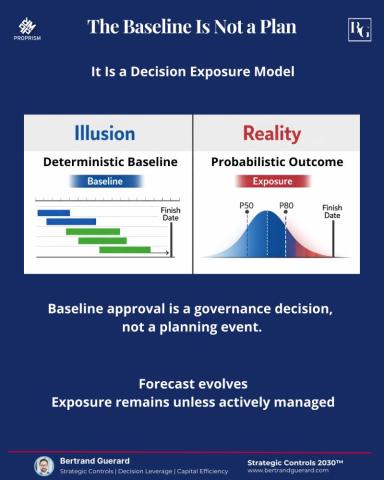
Most people treat the baseline as a delivery plan.
It isn’t. It’s a model of exposure.
A baseline doesn’t describe what will happen. It describes what must go right for the approved outcome to be achievable. Every duration, cost, and sequence quietly encodes assumptions about:
Scope stability — nothing major changes.
Productivity — teams perform at the expected rate.
System capacity — resources, interfaces, and supply chains behave as planned.
Risk realisation — threats stay dormant and opportunities materialise.
Decision latency — approvals arrive when needed.
When leadership approves a baseline, they are not approving a future. They are approving a level of exposure. That distinction matters, because execution does not create overruns. Execution simply reveals the gap between assumptions and reality.
Bent Flyvbjerg’s research shows that overruns and delays are astonishingly consistent across decades, industries, and geographies. Not because teams became less capable, but because baselines were approved with structural optimism baked in from the start.
A deterministic baseline creates the illusion of certainty. But projects operate in probabilistic environments. A single-point date or cost is not a prediction; it is a confidence statement, whether quantified or not. This is why two projects with identical baselines can diverge dramatically in outcome.
Read more and share your views...
Source: Bertrand GUERARD
COST ESTIMATING ESSENTIALS COURSE TO BOOST YOUR SKILLS!

Whether you’re a project manager, cost estimator, or part of a project team, staying sharp with cost estimating practices is essential in today’s dynamic project landscape.
The Cost Estimating Essentials course by Cost Engineering Academy gives you the tools to master cost estimation from A to Z, with real case studies and practical techniques you can apply right away.
Next to preparing estimates, we discuss validation, benchmarking, and the setup of an integrated cost-estimating process in your company.
About the course
You will learn terminology and approaches for different methods of cost estimating, while also learning how to apply them in your everyday work.
Next to preparing estimates, we discuss validation, benchmarking and setting up an integrated cost estimating process in your company.
It is an interactive course, with many case studies on which we work in groups.
What you’ll learn
By the end of the course, you will have gained:
- An understanding of the essentials of cost estimation and its relation to cost control, planning, contracting and risk management.
- The ability to create your own factor and detail estimates.
- The ability to setup estimate reports, and validate estimates of colleagues and 3rd parties
- The knowledge to prepare estimates more quickly and accurately.
- This will immediately improve the control you have over your projects and your profitability.
- The insight to identify major cost drivers and risks of engineering.
When combined with the estimating techniques we discuss, this enables you to estimate the engineering effort involved in your projects, control your project and prevent budget overruns.
Register...
THE PROGRAMME DIDN’T DELAY THE PROJECT — THE DECISIONS DID
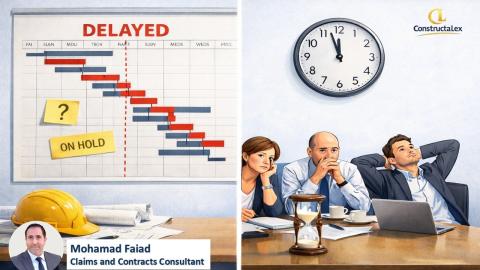
Many projects look delayed on paper.
Activities slip. Milestones move. Completion dates drift.
And the immediate conclusion is often simple:
“The Programme / Schedule caused the delay.”
In reality, that conclusion is frequently wrong.
What delayed the project was not the Programme, it was a sequence of decisions, late decisions, or decisions never taken at all.
Let’s break it down
The Common Misdiagnosis
When delays occur, attention quickly turns to:
- logic links
- float consumption
- critical path movements
- schedule updates
The Programme / Schedule becomes the accused. But a Programme / Schedule does not make decisions. It only reflects them.
Schedules show what happened. They do not explain why it had to happen that way.
Source: Mohamad Faiad
PROJECT ONLINE RETIREMENT. CAPABILITY GAPS ORGANISATIONS MUST ADDRESS?
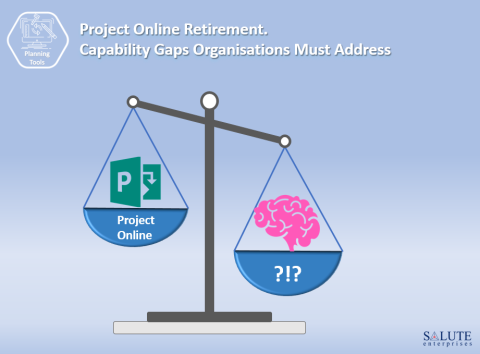
Microsoft is retiring Project Online. For many organisations, this is not simply a technical migration. It is a strategic decision about the future of their project delivery capability.
PPM vendors are actively positioning their platforms as “the best alternative”. For those making the transformation decision, the real challenge is knowing which aspects to evaluate and which questions to ask to uncover capability gaps across the alternatives before committing to a new system.
This post will help you identify the questions to ask to make a strategic decision and choose the most suitable alternative.
Source: Alex Lyaschenko
CONSTRUCTION CPM CONFERENCE - USA

After sixteen years of creating and conducting Construction CPM Conference, Fred has passed the torch to Josh Wollan of Zachry Construction to
Continue our Mission:
- To explore leading edge CPM scheduling concepts
- To seek out new expert schedulers and software solutions
- To boldly go where no scheduling conference has gone before
Fredric L. Plotnick, PhD, Esq, PE shall continue to provide service to our community and to those who desire projects to finish on time or even earlier or to those who wish to determine and PROVE responsibility for projects gone wrong. www.fplotnick.com 215-880-8899
SUPERIOR ALTERNATIVE TO THE "MOST POPULAR" SOFTWARE FOR US AS PLANNERS?

A superior alternative to the "most popular" software for us as planners?
Spider Project Team is a group of project management consulting and training companies. With headquarters in Moscow, Russia, we have branches, partners and representatives in other Russian cities, Australia, Brazil, Colombia, Kazakhstan, Romania, USA. We develop professional PM software Spider Project that is the most powerful and functional tool for project, program, and portfolio management.

We develop advanced approaches and methods of project management that are widely used by our customers in 37 countries. We provide training on project management and Spider Project software for our customers around the world.
We manage projects for our customers and implement corporate project management systems in companies of different industries. We believe that good project management can improve our world and are happy to provide the best services and tools to our customers.
We are proud of our achievements. The current version is used in 37 countries. Spider Project offers numerous unique functional features and is the only PM software that optimizes resource, cost, and material constrained schedules and budgets for projects and portfolios.
Spider Project offers numerous unique functional features and is the only PM software that optimizes resource, cost, and material constrained schedules and budgets for projects and portfolios.
Check it out here... Ask questions here...
IAMTECH

iPlan4.0 redefines how Shutdowns, Turnarounds, and Outages (STOs) are delivered, providing standardised execution, full lifecycle visibility, and predictable outcomes - at every site, on every turnaround.
With AI-enhanced workflows spanning initiation, scoping, planning, readiness, scheduling, QA/QC, execution, close out, and learning, iPlan4.0 gives you full control of your shutdown cycle.
Adopt modules you need, when you need them - and scale at your own pace.
First look at iPlan4.0 AI-Enhanced Planning: WATCH VIDEO — or VIEW BROCHURE. How would this transform planning in your world?
Are you based in Texas or Louisiana? If so, the IAMTech team will be there in person during March and are offering a limited number of in-person demonstrations of iPlan4.0.
To arrange your demonstration, contact [email protected].
This improves planning data quality, making execution safer and more predictable and increasing the likelihood that plants return to service on - or ahead of - schedule.
THE BEST CONTROLS CONFERENCE TIL EVA 34

The best controls conference til EVA 34
Back as 2 days we focus on the host of inputs required to inform the Controls and Skills behavioural ,technical ,psychological, and cultural people need to make it happen with purpose.
The full programme is on Eventbrite now...
33% Traitors discount til March 15. The Ides of March.
Use ETTUBRUTICM
A few spaces for supporting this and improving your professional network are available.
Source: Steve Wake
OFF_SHORE CLIENT CASE STUDY

IAMTech Offshore Client iPlan4.0 Case Study:
Built on nearly 30 years of turnaround delivery experience, iPlan4.0 embeds proven shutdown and turnaround best-practice methodology directly into the application — guiding teams to plan the right work, to the right standard, at the right time.
The result is a step-change in planning data quality, driving safer, more predictable execution and dramatically increasing the likelihood of plants returning to service on — or ahead of — schedule, protecting production revenue and corporate reputation.
Discover what this meant for one of our offshore clients: View Case Study.
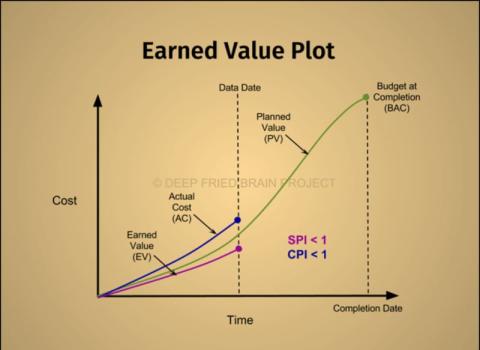
BASELINES DON’T CONTROL PROJECTS, PERFORMANCE DOES
On a lot of projects, once the schedule baseline is approved, everyone breathes a sigh of relief.
But a baseline by itself doesn’t control anything. It’s just a record of what we planned to do.
The real question is: How are we actually performing against that plan?
That’s where Earned Value Management makes the difference. The baseline tells us:
- When activities were originally supposed to start and finish
- What durations we committed to
- What the original budget looked like
It sets the target. And that’s important.
But projects don’t succeed just because we had a good target. They succeed because we measure how we’re doing and act early.
What Earned Value adds
Earned Value connects progress, time, and cost in a way a schedule alone can’t.
It helps answer:
- Are we truly completing work as planned, or just updating dates?
- Are we spending more than we should for the amount of progress achieved?
- Are we drifting into delay or overrun before it becomes visible on site?
Metrics like SPI and CPI may look like simple numbers, but they tell a deeper story about productivity, forecasting, and risk.
You can have a schedule that looks “on track,” while performance data is already warning you that trouble is coming.
Why this matters to me
For me, strong project controls is not just about updating a schedule every week.
It’s about connecting:
- The schedule baseline
- The cost baseline
- Actual physical progress
That’s what allows leadership to make proactive decisions instead of reacting when it’s already too late.
As we move into a new week, this is something I hope we all keep in mind on our projects, not just tracking where we planned to be, but really looking at how we’re performing against that plan. Because a baseline shows intention. Performance data shows reality.
Read the discussion and have your say...
Source: Sam Shodunke,PMP
WOULD YOU LIKE TO ADVERTISE ON PLANNING PLANET?
We want to give more of our members the opportunity to advertise on our site. Click here to get started!
THANK YOU FOR READING OUR MESSAGES
If you’d like to lend a hand to the small but enthusiastic team behind this newsletter, feel free to reach out to us at [email protected]. We know there’s still a lot of work ahead to make this an informative and eagerly anticipated bi-weekly read, so get in touch and be part of the journey.
Regards...
The Planning Planet Team