12.0 - MANAGING FORENSIC ANALYSIS
12.1 - Module 12-1 - Introduction to Managing Forensic Analysis
12.2 - Module 12-2 - Creating The Forensic Analysis Process & Procedures Manual
12.3 - Module 12-3 - Conduct the Preliminary Analysis
12.4 - Module 12-4 - Conduct the Schedule Analysis
12.5 - Module 12-5 - Damage Analysis Phase
12.6 - MODULE 12-6 - SETTLEMENT NEGOTIATIONS PHASE
12.6.1 INTRODUCTION
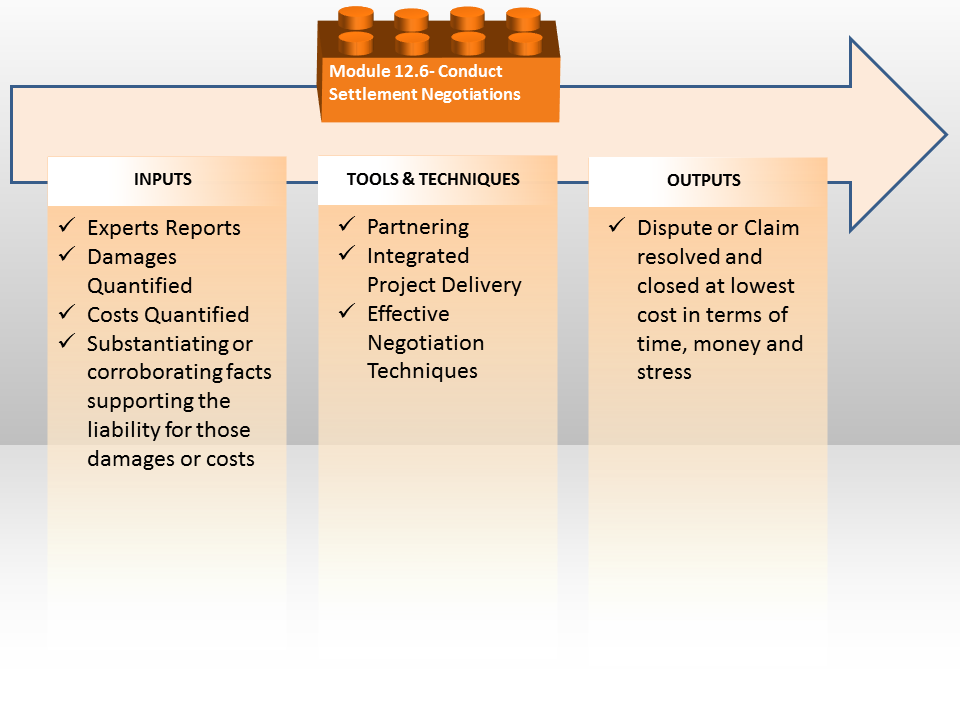
Figure 1 - Conduct the Settlement Negotiations Process Map
Source: Guild of Project Controls
As we can see from the graphic below, prevention or early resolution is the more preferable or ideal strategy to adopt in resolving disputes.
Implicit in this is the necessity for the project control professional to develop the appropriate negotiating skills to participate in and support the Alternate Dispute Resolution (ADR) process, regardless of which level of escalation it has reached.
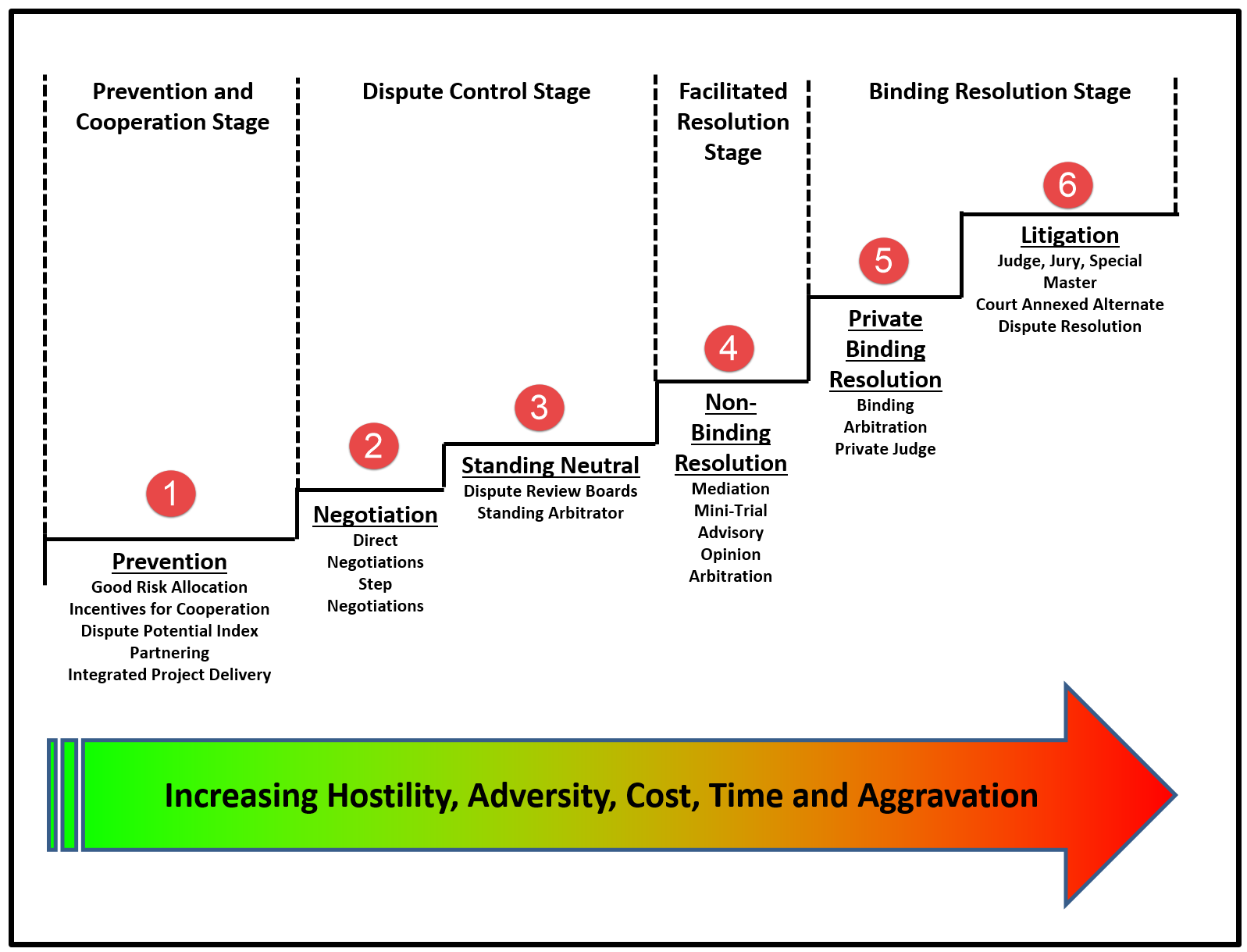
Figure 2 - Illustrating the Escalation Steps in the ADR Process
Source: Adapted from The Handbook of Conflict Resolution: Theory and Practice 3rd Edition, 2014, Coleman, Deutsch & Marcus
For this Module we are going to assume we are in the Prevention and Cooperation Stage to the Dispute Control Stage (1) where the negotiations are being done “in house” and more or less informally, preferably at the project level, where the project control professional is in a position to play a key leadership role not only as subject matter expert, but also as a facilitator.
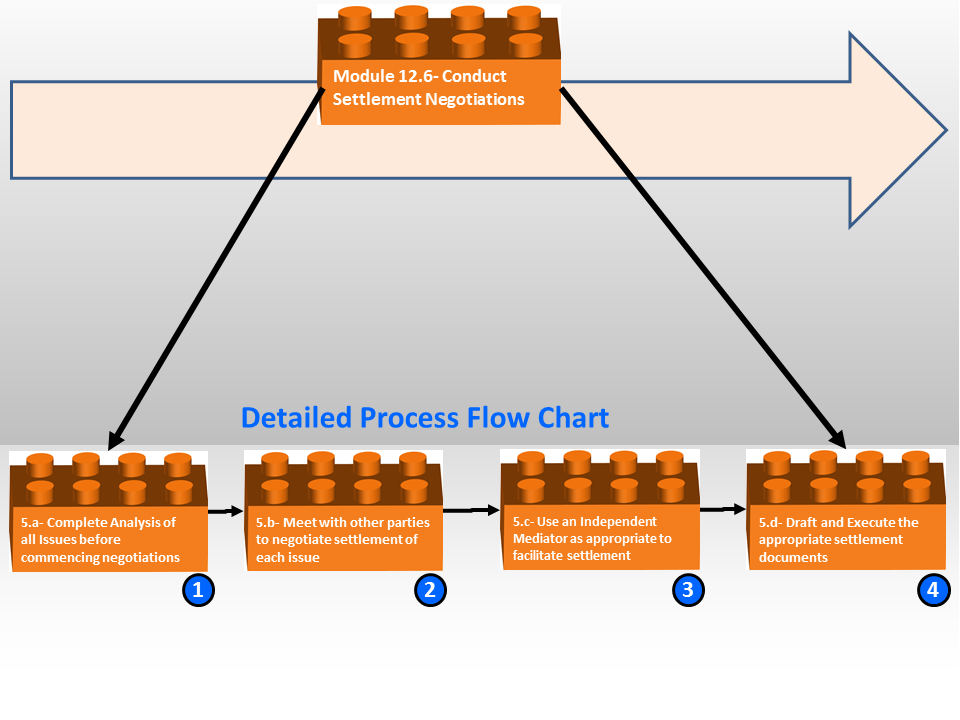
Figure 3 - Detailed Process Flow Chart for Conduct Settlement Negotiations
Source Adapted from Livengood, John (2014) “Construction Claims A to Z’ CDR 1484 AACE Symposium Bangkok, Thailand
This process, even though it is less formal and generally less adversarial, doesn’t mean it can be treated as unimportant or without a proper and appropriate level of professionalism.
(1) All parties need to have a full and complete understanding of all the issues, from all sides. Failure to understand and appreciate the position of the opposing side will make productive negotiations difficult if not impossible. There needs to mutual respect for the issues even though there is disagreement.
(2) Depending on how much animosity has been generated, it would be preferable for all parties to meet with the objective to be proactive in reaching a settlement.
(3) As mediation and negotiations requires training and a unique set of people skills, it is preferable if a trained mediator/negotiator is employed as an independent third party to facilitate the negotiations.
(4) Assuming agreement has been reached, and the claim/dispute is settled, the appropriate documents are drafted, signed and settlement is made promptly per what was agreed to.
As we know from Module 5- Managing Contracts, there are three tests or barriers that either party must prove or overcome in order to perfect or validate a claim:
- Entitlement- the parties to the contract had a contractual or legal duty or obligation to one another and that one of those parties failed to perform that duty, or performed it improperly or untimely.
- Quantum Meruit- that one or more of the parties to the contract incurred additional costs or otherwise suffered damages.
- Causal Relationship- and that those additional costs or damages were incurred as a result of the Entitlement above.
We also know that "prevention is often better than cure” which means that our first responsibility as project controls practitioners should be to try to PREVENT claims and disputes. To address that issue, we will explore Partnering and Integrated Project Delivery (IPD) approach.
Whether proactive or not, another skill set that project control professionals need to master is the ability to negotiate both personally as well as professionally. While this skill set was covered in Module 2- Managing People, it is worth revisiting here.
12.6.2 INPUTS
- Experts Reports
- Damages Quantified
- Costs Quantified
- Substantiating Or Corroborating Facts Supporting The Liability For Those Damages Or Costs
12.6.3 TOOLS & TECHNIQUES
12.6.3.1 Partnering
Partnering is one of two PROACTIVE approaches designed to PREVENT DISPUTES and CLAIMS from occurring or resolve them as amicably as possible when they do occur. The second proactive method is Integrated Project Delivery (IPD).
- The Business Dictionary definition of Partnering is “Establishing a long term win-win relationship based on mutual trust and teamwork, and on sharing of both risks and rewards. Partnering arrangement can be between labor and management, subordinates and the executive, suppliers and customers, and suppliers and suppliers. The objective is to focus on what each party does best, by sharing financial and other resources, and establishing specific roles for each participant".
For further elaboration and understanding, Chris Skeggs in his FIDIC paper “PROJECT PARTNERING IN THE INTERNATIONAL CONSTRUCTION INDUSTRY” (2004) stated that given they are many definitions of partnering, research indicates regardless of the definition, they all share these common attributes:
- partnering is a set of collaborative processes rather than simply a form of relationship;
- partnering is a co-operative arrangement between two or more organisations based on mutual objectives and increased efficiency through shared resources, open communications and continuous improvement;
- partnering is applied either in project situation known as project partnering or in a long-term relationship known as strategic partnering;
- project partnering is typically practised at a first generation level or at a more developed, more committed second generation level (mature partnering) (Baird and Bennett, 2001).
12.6.3.2 Integrated Project Delivery
Integrated Project Delivery is one of two PROACTIVE approaches designed to PREVENT DISPUTES and CLAIMS from occurring or resolve them as amicably as possible when they do occur. The second proactive method is Partnering
The AIA’s Center for Integrated Practice (CIP) defines “Integrated Project Delivery” (IPD) to be:
- IPD is a method of project delivery distinguished by a contractual arrangement among a minimum of owner, constructor and design professional that aligns business interests of all parties. IPD motivates collaboration throughout the design and construction process, tying stakeholder success to project success, and embodies the following contractual and behavioral principles:
Contractual Principles
- Key Participants Bound Together as Equals
- Shared Financial Risk and Reward Based on Project Outcome
- Liability Waivers between Key Participants
- Fiscal Transparency between Key Participants
- Early Involvement of Key Participants
- Jointly Developed Project Target Criteria
- Collaborative Decision Making
Behavioral Principles
- Mutual Respect and Trust
- Willingness to Collaborate
- Open Communication
To learn more, download a copy of the AIA’s Integrated Project Delivery Guide
12.6.3.3 Effective Negotiations Techniques
Depending on which references you use, negotiating can be a 4, 5 or 6 step process. A review of recent documents indicates a 5 step process is most common:
(1) Develop your claim position early. Timely notification is essential to perfecting your claim.
(2) Prepare a persuasive claim document, including both visual and narrative arguments.
(3) Understand the Strengths and Weaknesses your opponent’s position.
(4) Test the strengths and weaknesses of your position and Identify:
- which objectives cannot be compromised under any circumstances?
- which can be compromised and to which extent?
- which ones are expected to be compromised or dropped totally (pie-in the-sky)?
(5) Bargain in good faith. The objective is or should be to reach an equitable solution- a “Win-Win”. Important to be able to separate the personal issues from the real or true costs or damages.
Eugene Hadly in his paper “Effective Claims Negotiations for Construction” identified 8 “core competencies” that effective negotiators need to develop:
(1) a willingness to become immersed in the legal and factual basis of your claim position;
(2) knowledge of the contracts involved and the correct legal interpretation of those contracts;
(3) an ability to succinctly and accurately convey the strengths of your claim position, without apologizing for its weaknesses;
(4) an ability to read the reactions of the opposing party;
(5) an ability to contain and manage conflict and avoid escalating the dispute;
(6) an appreciation for when to lay your cards on the table;
(7) an unwavering patience and commitment to the negotiation process;
(8) a creative approach to problem solving and finding solutions; and the courage to agree.
12.6.4 OUTPUTS
- Dispute Or Claim Resolved And Closed At Lowest Cost In Terms Of Time, Money Or Stress
12.6.5 REFERENCES & TEMPLATES
- Frisby, Thomas (2015) The Science Of Negotating Construction Claims Http://Www.Mcasc.Com/Docs/Industrynews/-143.Pdf
- Devries Mathew (2014) Bargaining Room V. False Claims: 5 Tips For Negotiation Of Construction Claims Http://Www.Bestpracticesconstructionlaw.Com/2014/05/Articles/Best-Practices/Negotiation-Construction-Claims/
- Heady, Eugene (2013) Effective Negotiation Of Construction Claims
- Http://Www.Martindale.Com/Construction-Law/Article_Smith-Currie-Hancock-Llp_2040142.Htm
- Allan, Mike (2013) E.C Harris “Global Construction Disputes: A Longer Resolution” Http://Www.Echarris.Com/Pdf/Ec%20harris%20construction%20disputes%202013final.Pdf
- KPMG (2015) Global Owner’s Survey Https://Www.Kpmg.Com/Global/En/Issuesandinsights/Articlespublications/Global-Construction-Survey/Documents/Global-Construction-Survey-2015.Pdf
12.7 - Module 12-7 - Formal Disputes Resolution
GPCCAR M12-7, Revision 1.01