06.0 - MANAGING RESOURCE ACQUISITION / ALLOCATION
06.1 - Module 06-1 - Introduction to Managing Resource Acquisition / Allocation
06.2 - Module 06-2 - Develop the Resource Policies & Procedures Manual
06.3 - Module 06-3 - Acquiring Manpower for the Project
06.4 - MODULE 06-4 - ACQUIRING MATERIALS FOR THE PROJECT
06.4.1 - INTRODUCTION
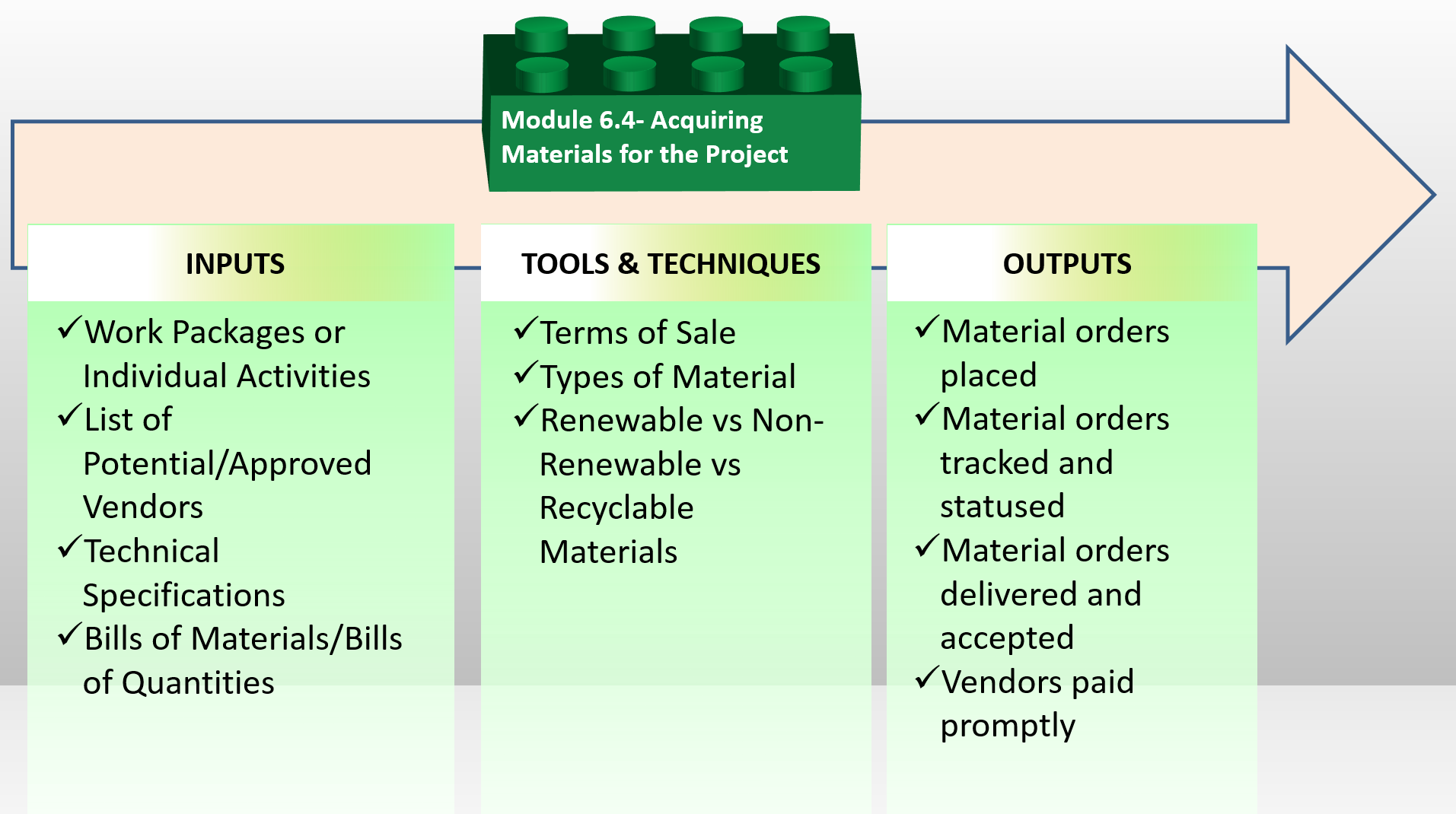
Figure 1 - Process Map for Acquiring Materials for the Project
Source: Guild of Project Controls
Unless the owner is going to provide some or all materials on a project (“owner supplied materials) or if the contract type is some form of cost reimbursable, such that the owner is obligated to provide some or all of the materials, acquiring materials for the project is primarily the responsibility of the CONTRACTOR’s project manager, with the support of the contractors project control team.
As we know from the research on the leading causes of Labour inefficiency , regardless of who is responsible, a tested and proven “best practice” is the requirement to INTEGRATE the procurement and construction schedules otherwise, engineering doesn’t know the priorities or the “drop dead dates” when they have to initiate the procurement process (i.e. writing the purchase order) in order to have the materials delivered to the project in order not to delay the start of construction, and without milestones at each step of the process, the procurement and expediting staff have no clue what are the relevant priorities for any given project.
Management in any company must understand the art of obtaining products and services. The procurement cycle follows specific steps for identifying a requirement or need of the owner through to the delivery of the material to the site and payment for the material. Responsible management of public and corporate funds is vital when handling this necessary process, whether in strong or weak economic markets. Following a proven step-by-step process will help project managers with the support of project control professionals, to successfully achieve their goals.
- STEP 1: NEED RECOGNITION
The business must know what products they need and just importantly, WHEN they need them, whether from internal (owner supplied) or external sources (contractors / vendors). The product may be one that needs to be reordered more than once over the life of the project, or it may be a one-time order. For both contractors and owners, this information will be coming from or found in the technical specifications and other contract documents. Getting the “right” product is critical for the success of the project as at some point, the contractor will have to validate the contractual “shall clauses”. (See Module 3 - Managing Scope and Module 5 - Managing Contracts for more on this).
- STEP 2: SOURCE OPTIONS
The project team (be it owner or contractor) needs to determine where to obtain the product. The owner may have provided an approved vendor list. If not, the contractor will need to search for a supplier using purchase previous orders or research a variety of other sources such as magazines, the Internet or sales representatives. In some cases, the owner will have to qualify or approve the suppliers to assure their products are appropriate. This is especially true if the contractor want to propose an “or equal” alternative to one the owner specified.
- STEP 3: PRICE AND TERMS
The contractor (or owner if owner supplied materials) will investigate all relevant information to determine the best price and terms for the product. This will depend on if the materials are commodities (readily available products) or specialized materials. Usually the contractor or owner will obtain proposal from three suppliers before it makes a final decision.
- STEP 4: PURCHASE ORDER
The purchase order is used to buy materials between a buyer and seller. It specifically defines the price, specifications and terms and conditions of the product or service and any additional obligations. The purchase order must be delivered, usually by fax, mail, personally, email or other electronic means. Sometimes the specific delivery method is specified in the purchasing documents. The recipient then acknowledges receipt of the purchase order. Both parties keep a copy on file. For project controls this is an ESSENTIAL milestone to capture and record for there are many examples where the purchase was thought to be issued but never was and by the time it was discovered the delivery delayed the project. This is one of the reasons why “no activity should be longer than the reporting period” is one of the “rules of thumb” that successful project planners/schedulers adhere to whenever possible.
- STEP 5: SHIPPING
Shipping is the suppliers responsibility but whether the procurement is being done by the owner or the contractor they need to know and understand the various terms used in the shipping and transportation business. Failure to understand the terminology can lead to your materials (or equipment) being stuck on a ship or in a port storage yard, costing both time and money until it can be transferred.
STEP 6: EXPEDITING
Expedition of the material is a tactical risk response in the event a material delivery becomes later than the early need date of the activities or work packages the material is needed for. It becomes especially important if there are any delays. This is why it is so important that the planner/scheduler use the construction need dates (the scheduled early start of an activity or work package) and work backwards to see whether a material delivery needs to be expedited or not. Expediting late deliveries of materials normally involves such things as paying overtime to the vendor to have the materials packaged and shipped out of their normal order processing sequence and/or air freighted, both of which will increase costs considerably.
- STEP 7: DELIVERY
Delivery means delivered to the actual site. This can be one of the longest and most risky parts of the procurement process, especially if you are working on a remote site. Often materials will have to be off-loaded from one vehicle or vessel onto another one. There are also customs clearances if you are importing materials from another country. This is one of the strongest arguments for considering to use logistics specialists like FedEx, UPS or DHL and outsource the entire procurement process to them.
- STEP 8: RECEIPT AND INSPECTION OF PURCHASES
Once the sending company delivers the product, the recipient accepts or rejects the items. Acceptance of the items by the purchaser obligates the purchasing entity to pay for them.
- STEP 9: INVOICE APPROVAL AND PAYMENT
Three documents must match when an invoice requests payment – the invoice itself, the receiving document and the original purchase order. The agreement of these documents provides confirmation from both the receiver and supplier. Any discrepancies must be resolved before the recipient pays the bill. Usually, payment is made in the form of cash, check, bank transfers, credit letters or other types of electronic transfers.
- STEP 10: RECORD MAINTENANCE
In the case of audits, the organization must maintain proper records. These include purchase records to verify any tax information and purchase orders to confirm warranty information. Purchase records reference future purchases as well.
Notice that consistent with the rule of thumb that no activity should be longer than the reporting period, we tried to keep the activities to be less than 7 days. If we were reporting weekly, and the material were critical or near critical, then we would want to use one of the tracking options such as that provided by FedEx, UPS or DHL so that at the end of the first week after the material has been shipped, (Activity 5) we would know exactly where it was.
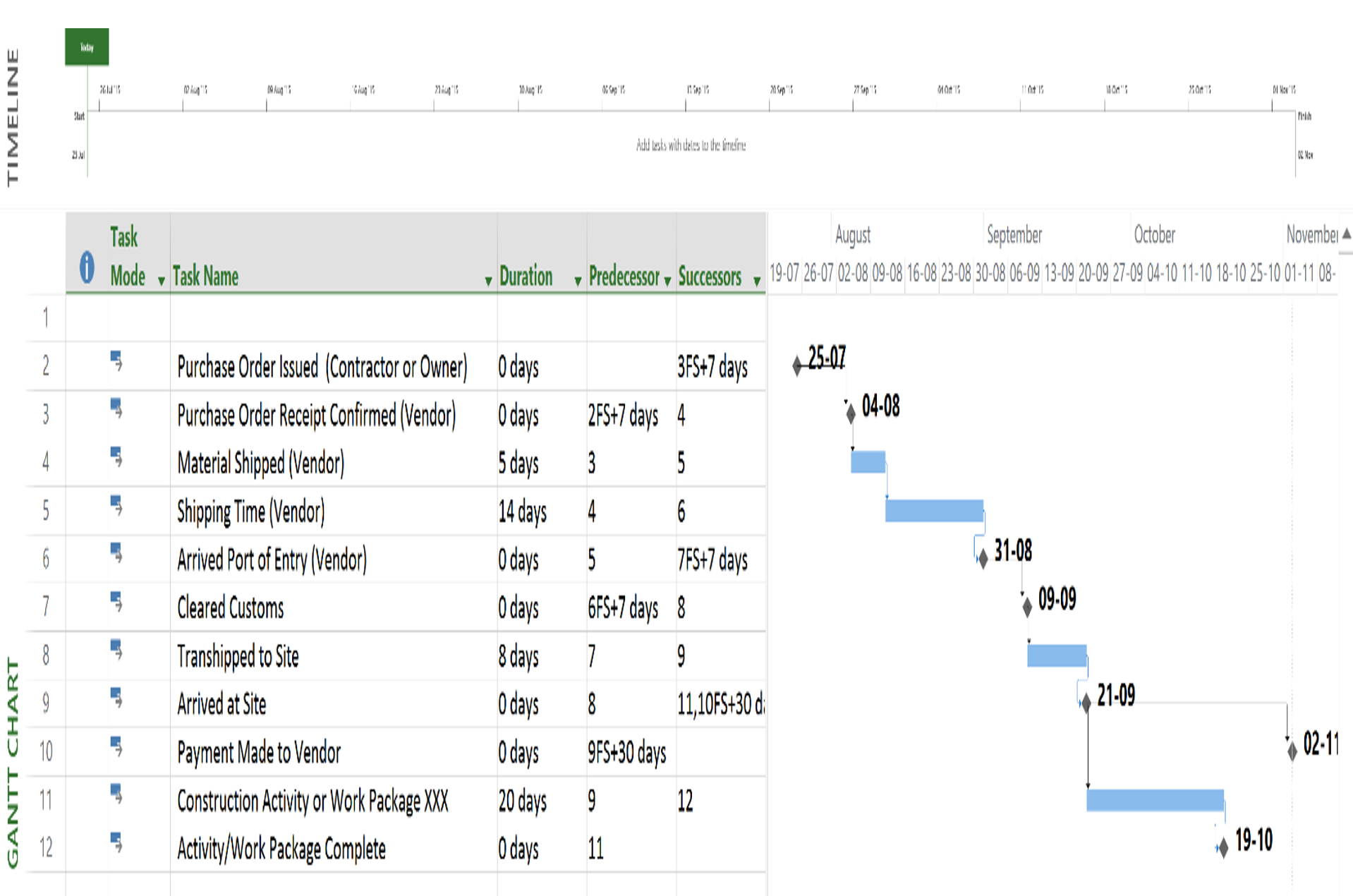
Figure 2 - Fragnet showing a simple procurement process for importing material from a nearby country into your country
Source: Giammalvo, Paul D (2015) Course Materials. Contributed Under Creative Commons License BY v 4.0
Figure 2 gives us a simplified example of a procurement tracking process set up as a frag net to give you an idea of what one looks like. As a project control practitioner you have to research whether there are any additional activities or milestones and what the actual durations are or should be, understanding they will change from country to country and will also vary from material to material. Be sure not to use the P50 value unless the variance is VERY small. For most procurement items P75 is the recommended contingency or buffer, at least until you have actual experience. Also note that no activity for expediting was in there. IF the activity slips and starts eating up float, or if the activity is already on the critical path, then as the project planner/scheduler, you need to notify the project manager and get a decision whether or not to initiate expediting the delivery. OR if there is no way to expedite then you need to find a WORK AROUND, which is defined to be “Impromptu procedure developed to counteract unanticipated problem or shortcoming in a process, program, strategy, or system.”
Worth noting is because of the sheer volume of materials in most projects, it is impractical to provide tracking for ALL materials on ALL activities or work packages, so sound professional judgement needs to be used by the planner/scheduler, otherwise schedules can easily end up with 20,000 or 30,000 or more activities. It will be explored in Module 7 - Managing Planning & Scheduling how we can use “Rolling Wave” planning to cut down on the need for tracking on all but the “Long Lead” items.
To help understand how to prioritize activities in general but procurement activities specifically, we look to an adaptation of Stephen Covey’s (1989) "The Seven Habits of Highly Successful People" New York: Fireside.
In the example below, we can see that to establish or calculate priority, we look first to Total Float. The lower the Total Float value, the more IMPORTANT the activity is. Then we look to how soon we need it. The sooner we need it, the more URGENT and the further away the need date is in the future, the less URGENT. For those whose project are in perpetual crisis mode, if you apply this approach and those activities which are IMPORTANT (relatively low float values) and are a month or more into the future, you will substantially reduce the numbers of material related crisis on your project. This is the very essence of “rolling wave planning” which we will be exploring in Module 7 - Managing Planning & Scheduling.
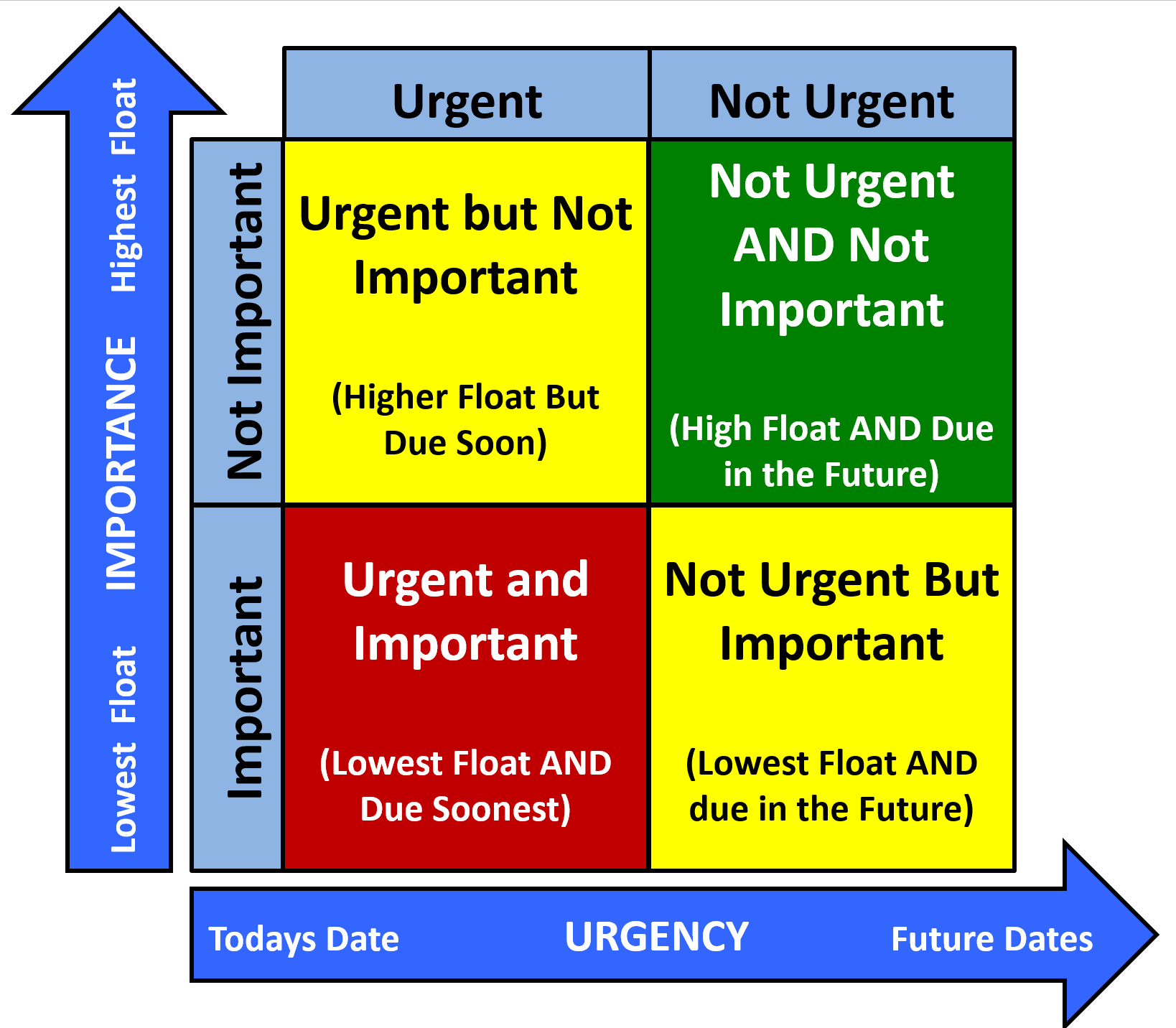
Figure 3 - How to Determine Priority of an Activity
Source: Giammalvo, Paul D (2015) Course Materials. Contributed Under Creative Commons License BY v 4.0
Given that most construction sites are short on storage space and because storing materials on site are subject to damage and theft not to mention the cost of double handling material, the project control department is responsible to help provide for “just in time” (JIT) delivery. Not only does this reduce the risk of loss or damage to the materials it also reduces the costs of double handling and the “carrying costs” (finance charges) incurred when material is delivered to the site and has to be paid for, but because it is not yet installed, may not be billable by the contractor to the owner. “Just in Time” (JiT) inventory management is defined to be “Pull' (demand) driven inventory system in which materials, parts, sub-assemblies, and support items are delivered just when needed and neither sooner nor later. Its objective is to eliminate product inventories from the supply chain. As much a managerial philosophy as an inventory system, JIT encompasses all activities required to make a final product from design engineering onwards to the last manufacturing operation. JIT systems are fundamental to time based competition and rely on waste reduction, process simplification, setup time and batch size reduction, parallel (instead of sequential) processing, and shop floor layout redesign. Under JIT management, shipments are made within rigidly enforced 'time windows' and all items must be within the specifications with very little or no inspection. It was developed and perfected by Taiichi Ohno of Toyota Corporation during 1960s and 70s to meet fast changing consumer demands with minimum delays. See also just on time.”
Important to remember is that in order to fully integrate procurement into the CPM schedule requires that we:
(1) Know the duration of each step in the procurement process from placement of the purchase order to delivery FOB site
(2) Work at nothing less than a P75 duration and for remote sites and/or work in developing nations, P90 is the recommended risk contingency or buffer to allow.
(3) Calculate the start of the process and all interim steps using the BACKWARDS pass dates, driven by the work package where the materials will be used. (Material “Need By” Date)
As covered in greater detail in Module 5 - Managing Contracts, given most contractors are working on single digit EBIT margins, this is an opportunity for contractor’s project control teams in particular to demonstrate how a project controls team can add value to the project in excess of their costs.
As this is such an important topic, it is highly likely that you will see questions on the GPC exams on covering both the cost and planning scheduling implications. For supplemental reading, here are three recommended references:
- Ballard, Glen and Howard, Gregory (n.d.) TOWARD CONSTRUCTION JIT http://www.leanconstruction.org/media/docs/TowardsJIT.PDF
- Bertleson, Sven and Nielsen, Jorgen (1997) Just-In-Time Logistics in the Supply of Building Materials http://www.bertelsen.org/strategisk_r%C3%A5dgivning_aps/pdf/just-in-tim…
- Karlson, Tobias (2009) Effective material logistics in construction: Lessons from a Swedish apartment-block project http://www.bygglogistik.se/exarbete/Karlsson.pdf
06.4.2 - INPUTS
- WORK PACKAGES OR INDIVIDUAL ACTIVITIES
- LIST OF POTENTIAL/APPROVED VENDORS
- TECHNICAL SPECIFICATIONS
- BILLS OF MATERIALS/BILLS OF QUANTITIES
06.4.3 - TOOLS & TECHNIQUES
06.4.3.01 - Terms of Sale
Given that nearly all projects, regardless of the country where they are being executed, require the importation of materials or equipment using shipping or air freight, both owner and contractor project control professionals need to be familiar with the various Terms of Sale acronyms used by the shipping industry. Failure to know and understand these will not only increase the risk of your materials or equipment being delivered late, but also the risk of significant increase in the cost of procurement. The following terms come to us from the FedEx glossary of shipping terms:
The point at which sellers have fulfilled their obligations so the goods are said to have been delivered to the buyer. They are shorthand expressions that set out the rights and obligations of each party when transporting the goods. The different types of Terms of Sale are:
- FCA/FOB (Free Carrier/Free on Board). Free Carrier at a named port of export. The seller quotes the buyer a price that covers all costs up to and including delivery of goods aboard an overseas vessel (e.g. airplane).
- CIP/CIF (Carriage Insurance Paid/Cost Insurance and Freight). Carriage Insurance Paid to a named overseas port of disembarkation (i.e. import). Under this term, the seller quotes a price for the goods, including insurance, plus all transportation, and miscellaneous charges to the point of disembarkation from the vessel.
- CPT/C&F (Carriage Paid To/Cost & Freight). Carriage Paid To is the named overseas port of disembarkation (i.e. import). Under this term, the seller quotes a price for the goods that includes the cost of transportation to the named point of import. The cost of insurance is left to the buyer's account.
- (EXW) Ex Works. Under this term, the price quoted applies only at the point of origin and the seller agrees to place the goods at the disposal of the buyer at a specific place on the date or within the period fixed. All other charges are for the account of the buyer.
- (DDU) Delivered Duty Unpaid. Under this term, the seller fulfills his obligation to deliver when the goods have been made available at the named place in the country of importation. The seller has to bear the costs and risks involved in bringing the goods thereto as well as the costs and risks of clearing Customs.
- (DDP) Delivered Duty Paid. Under this term, the seller fulfills his obligation to deliver when the goods have been made available at the named place in the country of importation. The seller has to bear the risks and cost, including duties, taxes and other charges of delivering the goods. From the standpoint of practicality, what today’s project control practitioner needs to be looking for are what is known as INTEGRATORS who provide DOOR to DOOR service: Universal Logistics Management Universal Cargo Glossary http://www.universalcargo.com/logistics-glossary • Integrators - Companies that provide door-to-door domestic and international air freight service. Own and operate aircraft, as well as ground delivery fleets of trucks. Example: UPS, FedEx, BAX Global, Emery Worldwide. In contrast, freight-hauling airlines (e.g., Delta, Lufthansa) typically do not provide door-to-door service.
- Door-to-Door - Transportation service arrangement in which freight is moved from origin (shipper) through to ultimate destination (consignee) for a given rate. Trucking companies typically offer door-to-door service. Railroads do not, unless the shipper and consignee both have rail sidings. Brokers, forwarders, NVOCCs etc. often package together door-to-door service through contracts with multiple carriers.
- NVOCC - Non Vessel-Operating Common Carrier. Owns no vessels (ships), but provides ocean shipping freight-forwarding services. Provides consolidated, negotiated-rate services for ocean and inland water carriers. Often will affiliate with freight forwarders to provide pickup/delivery, other services.
06.4.3.02 - Types of Material
The terminology pertaining to construction materials can be complicated and confusing. To start this module off, we need to know and understand the terminology.
06.4.3.02.1 - Bulk Purchases
Material ordered, stored, issued, and sold by weight (such as bar stock or nails), volume (such as cement or oil), or footage (such as lumber).
06.4.3.02.2 - Consumable
Consumable materials are Good which are:
(1) Used up (not returned) after issuance from stores. Form oil used for concrete forms or gasoline (petrol) used to power machinery and welding rods are typical examples of this category of consumable.
(2) Become incorporated into other goods and lose their identity. Mixing the bulk materials sand, cement and gravel together to make concrete is an example of this type of consumable.
(3) Cannot be used for their intended purpose without extinguishing or transforming their substance. Plywood purchased for concrete formwork is an example of this type of consumable. After some number of uses, the plywood is no longer suitable for use as formwork as it has lost its strength and/or does not produce a smooth enough finish to the concrete. All bulk materials are consumables but not all consumables are bulk materials.
06.4.3.02.3 - Direct Materials
Direct Materials are defined to be “all items such as raw materials, standard and specialized parts, and sub-assemblies required to assemble, construct or manufacture a complete product. Direct material costs are assignable to a specific product, cost center, work package, activity or work order.” Explained another way, anything that becomes a permanent part of or incorporated into the project deliverables and is turned over to the owner at completion of the project is a direct material.
06.4.3.02.4 - Indirect Materials
Indirect materials are Consumables (such as cleaning chemicals, disposable tools, protective devices) not used as raw materials, but which make the production of a good or service possible, more efficient, or safer. Indirect material costs are not readily identifiable with a specific product or job. They are termed indirect costs and are charged to overhead accounts. Generally speaking indirect materials which are not consumed in the process must be removed from the site at the completion of the project. (i.e. formwork and temporary storage buildings).
06.4.3.03 - Renewable vs Non-Renewable vs Recyclable Materials
Renewable Resources are “A resource that can be totally replaced or is always available naturally, or that is practically inexhaustible”. A common example is wood, which comes from trees or the sand and gravel which go into making concrete. A renewable resource can also be classified a consumable resource as well as an indirect or direct material.
Non-Renewable resources is a natural resource such as coal, gas, or oil that, once consumed, cannot be replaced. Most energy resources currently in use are non-renewable while the renewable ones (such as wind and solar power) are not well developed. Also called depletable resource. A non-renewable resource can also be classified a consumable resource as well as an indirect or direct material.
Recyclable Resource is a Raw or processed material that can be recovered from a waste stream for reuse. A recyclable resource can also be classified a consumable resource as well as an indirect or direct material. A common example of this today is the grinding of existing asphalt pavement and recycling it by remixing it with new material for reuse on the same road it was salvaged from.
With many organizations “going green” as part of their corporate social responsibility (CSR) programs requirements to use recyclable materials is often showing up in contracts and for contractors and owners alike, recycling as much construction material as possible makes sense not only environmentally but perhaps financially as well.
06.4.3.04 - “Just in Time” material delivery
Given that storage space on many projects is limited and knowing that maintaining inventories is both expensive due to carrying costs as well as stored materials being subject to damage, theft and obsolescence, whenever possible, project control professionals need to fully integrate procurement and execution schedule. In many sectors, especially oil, gas and mining this is known as an “Engineer, Procure and Construct” (EPC) schedule while in general construction this is known as a “Design-Build” or Integrated Project Delivery (IPD) schedule. (For more on contract types and contracting methods, see Module 5 - Managing Contracts)
The concept of “Just in Time” (JIT) procurement comes to us from by Taiichi Ohno of Toyota Corporation during 1960s and 70s to meet fast changing consumer demands with minimum delays. Under JIT management, shipments are made within rigidly enforced 'time windows' and all items must be within the specifications with very little or no inspection.
The challenge facing project control professionals is how to schedule material deliveries to be as close to “Just in Time” as possible without increasing the risk of delaying the activities. To accomplish this objective project control professionals especially those who are planner/schedulers, need to know and understand the basic formulas used by inventory managers and apply them where necessary and appropriate to the CPM scheduling process.
“JIT” is appropriate for both direct and indirect material resources which have a time constrained “shelf life” (i.e. Concrete); for large “one of a kind” pieces of equipment such as reactor vessels which require heavy lift cranes for installation or for projects where security (theft of materials) or limited storage space (inner city projects) or where the suppliers are in close physical proximity to the project. In the event these conditions are not the case, then the next alternative is some degree of inventory storage.
06.4.3.05 - Inventory Control/Management
Given that one of the leading causes for delays on projects comes from crews waiting for materials, inventory control/inventory management is an issue of concern to the project control professional, especially when working at remote sites or sites where delivery or movement of materials is constrained by distance, access or other challenges (see Module 4 - Managing Risk & Opportunities) which impact the timely delivery of materials.
The challenge is while project controls has or should have an accurate, reliable and precise measurement on material consumption rates, material need by dates and total amount of any material resources needed, unless project controls is responsible for procurement, this information needs to be communicated clearly and frequently with procurement. Generally speaking, this is less of an issue for contractors than for owner organizations, however even large contractors may have centralized the procurement functions in which case the communications between the project controls and procurement functions are essential and need to be recognized, established and maintained. (See also Module 2.2 - Developing Individual Competencies)
Storage of materials suitable for applying inventory control tools/techniques can be used for bulk materials (i.e. sand, cement and stone for on-site batching of concrete); or for materials such as doors or cabinetry which need to be acclimated to on site temperature and humidity before installation or it can be applied to consumable materials such as fuel, fasteners, form oil or any other direct or indirect materials which, if not available when needed, can or will slow the progress or impede the worker productivity on the project.
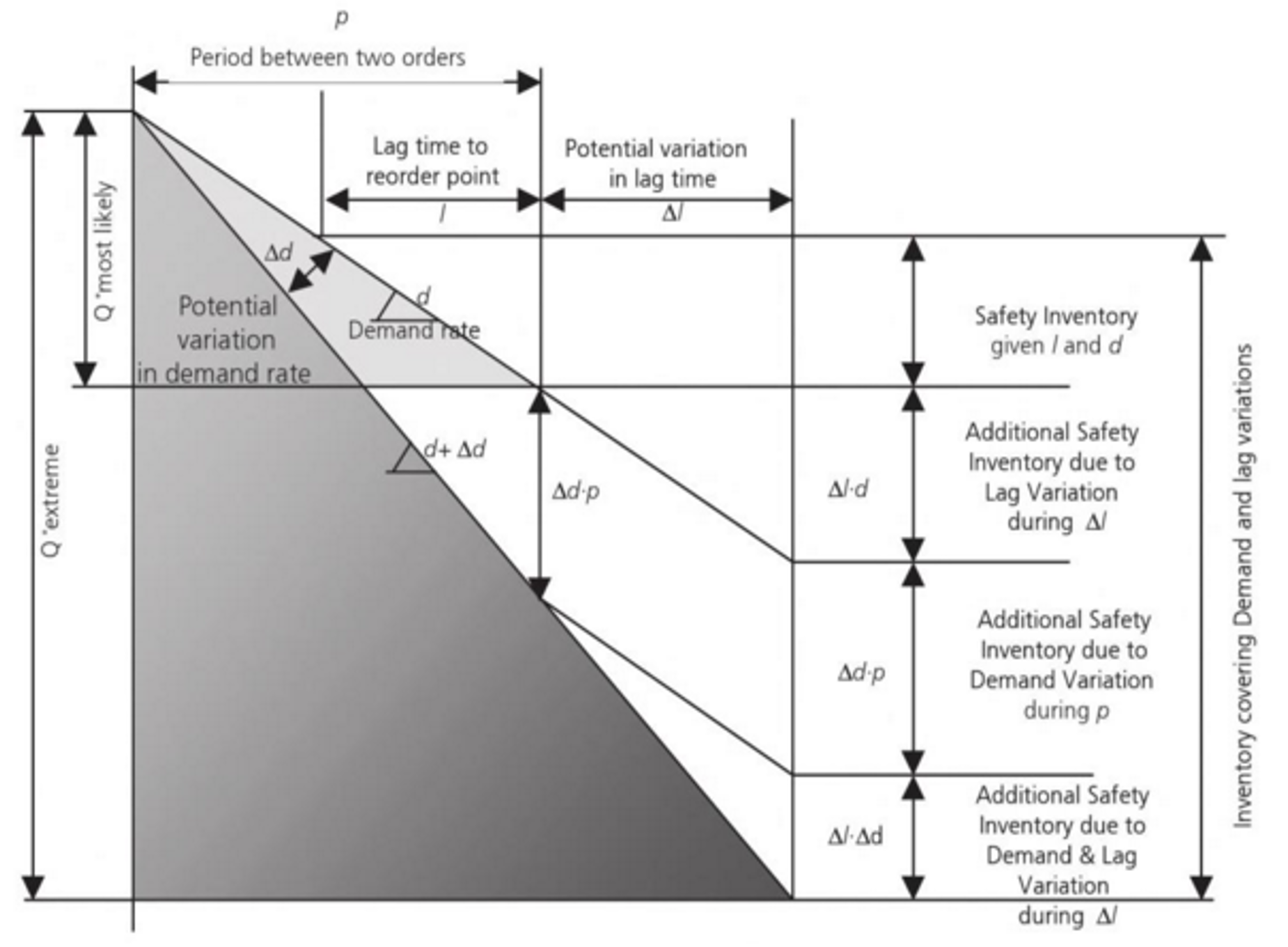
Figure 4 - Wilson Formula for Inventory Management/Control
Source: Wilson Formula for Inventory Management/Control (n.d.) Essentials of Logistics and Management, Third Edition (2012) edited by Corynne Jaffeux, Philippe Wieser
06.4.3.05.1 - Establishing Stock Levels
To avoid over-stocking and under stocking of materials, project controls has to decide about the maximum level, minimum level, re-order level, danger level and average level of materials to be kept in the store. These terms are explained below:
06.4.3.05.1.1 - Re-Ordering Level
It is also known as ‘ordering level’ or ‘ordering point’ or ‘ordering limit’. It is a point at which order for supply of material should be made. This level is fixed somewhere between the maximum level and the minimum level in such a way that the quantity of materials represented by the difference between the re-ordering level and the minimum level will be sufficient to meet the demands of production till such time as the materials are replenished. Reorder level depends mainly on the maximum rate of consumption and order lead time. When this level is reached, the store keeper will initiate the purchase requisition.
Reordering level is calculated with the following formula:
- Re-order level =Maximum Rate of consumption x Maximum lead time
06.4.3.05.1.2 - Maximum Level
Maximum level is the level above which stock should never reach. It is also known as ‘maximum limit’ or ‘maximum stock’. The function of maximum level is essential to avoid unnecessarily tying up capital in inventories, losses on account of deterioration and obsolescence of materials, extra overheads and temptation to thefts etc. This level can be determined with the following formula:
- Maximum Stock level = (Reordering level + Reordering Quantity) - (Minimum Consumption x Minimum re-ordering period)
06.4.3.05.1.3 - Minimum Level
It represents the lowest quantity of a particular material below which stock should not be allowed to fall. This level must be maintained at every time so that production is not held up due to shortage of any material. It is that level of inventories of which a fresh order must be placed to replenish the stock. This level is usually determined through the following formula:
- Minimum Level = Re-ordering level - (Normal rate of consumption x Normal delivery period)
06.4.3.05.1.4 - Average Stock Level
Average stock level is determined by averaging the minimum and maximum level of stock.
The formulas for determination of the level are as follows:
- Average level = 0.5*(Minimum stock level + Maximum stock level)
This may also be expressed by Minimum Level + 1/2 of Re-ordering Quantity.
06.4.3.05.1.5 - Danger Level
Danger level is that level below which the stock should under no circumstances be allowed to fall. Danger level is slightly below the minimum level and therefore the purchases manager should make special efforts to acquire required materials and stores. This level can be calculated with the help of following formula:
- Danger Level =Average Rate of Consumption x Emergency (Expedited) Delivery Time.
06.4.3.05.1.6 - Economic Order Quantity (EOQ)
One of the most important problems faced by the purchasing department is how much to order at a time. Purchasing in large quantities involve lesser purchasing cost. But cost of carrying them tends to be higher. Likewise if purchases are made in smaller quantities, holding costs are lower while purchasing costs tend to be higher. Hence, the most economic buying quantity or the optimum quantity should be determined by the purchase department by considering the factors such as cost of ordering, holding or carrying.
This can be calculated by the following formula:
- Q = √2AS/I
Where:
Q stands for quantity per order; A stands for annual requirements of an item in terms of the appropriate or relevant currency; S stands for cost of placement of an order in the appropriate or relevant currency; and I stand for inventory carrying cost per unit per year in the appropriate or relevant currency.
06.4.3.05.1.7 - Inventory Turnover Ratio
These are calculated to minimise the inventory by the use of the following formula:
- Inventory Turnover Ratio = Cost of goods consumed during the reporting period/Average inventory held during the same period
The ratio indicates how quickly the inventory is used for production. Higher the ratio, shorter will be the duration of inventory at the jobsite. It is the index of efficiency of material management.
06.4.4 - OUTPUTS
- MATERIAL ORDERS PLACED
- MATERIAL ORDERS TRACKED AND STATUSED and INVENTORY TURNOVER RATIO
- MATERIAL ORDERS DELIVERED AND ACCEPTED
- VENDORS PAID PROMPTLY
06.4.5 - REFERENCES & TEMPLATES
- LOGISTICS AND SUPPLY CHAIN MANAGEMENT (2015) HTTP://WWW.SUPPLYCHAINOPZ.COM/2012/04/WHAT-IS-LOGISTICS-AND-SUPPLY-CHAIN-MANAGEMENT.HTML
- SOBOTKA, ANNA, CZARNIGOWSKA, AGAT, STEFANIAK, KRZYSZTOF (2005) LUBLIN UNIVERSITY OF TECHNOLOGY INSTITUTE OF CONSTRUCTION AND ARCHITECTURE LOGISTICS OF CONSTRUCTION PROJECTS HTTP://ALMAMATER.IKB.POZNAN.PL/FCEE/2005.06/FULL/FCEE_2005-06_203-216_LOGISTICS_OF_CONSTRUCTION.PDF
- OLSSON, FREDRIK (2000) SUPPLY CHAIN MANAGEMENT IN THE CONSTRUCTION INDUSTRY - OPPORTUNITY OR UTOPIA?
- HTTP://LUP.LUB.LU.SE/LUUR/DOWNLOAD?FUNC=DOWNLOADFILE&RECORDOID=525844&FILEOID=1593289
- US DEPT OF TRANSPORTATION, GLOSSARY OF SHIPPING TERMS (2008) HTTP://WWW.MARAD.DOT.GOV/WP-CONTENT/UPLOADS/PDF/GLOSSARY_FINAL.PDF
- REVAY REPORT INDEX OF PAPERS HTTP://WWW.REVAY.COM/INDEX.PHP/PUBLICATIONS/THE-REVAY-REPORT/
06.5 - Module 06-5 - Acquiring Equipment for the Project
06.6 - Module 06-6 - Allocating Resources
GPCCAR M06-4 - Managing Resource Acquisition / Allocation, Revision 1.00